Best vegetables for containers in Atlanta
Atlanta's Zone 7b/8a climate runs about 230 growing days, which means two full rounds of vegetables in a single year. Cool-season crops like lettuce and radishes go in during February and March, finish up before summer heat arrives, and then come back again in September and October. Warm-season crops like tomatoes and peppers take over from late April through the first frost in mid-November.
Container growing solves one of Atlanta's biggest gardening problems. Georgia red clay drains poorly and compacts easily, which makes in-ground vegetable gardening harder than it should be. A cedar planter filled with quality potting mix gives roots exactly the loose, well-drained environment they want. You also get the flexibility to move containers around to chase sun, bring them in before a cold snap, or rearrange the deck when you need more space.
The eight vegetables below all perform reliably in Atlanta containers. Each one has different depth requirements, so matching the vegetable to the right planter size is the first decision to make.
Tomatoes
Tomatoes are the most rewarding container vegetable you can grow in Atlanta, and the yield from a single well-managed plant justifies the effort completely.
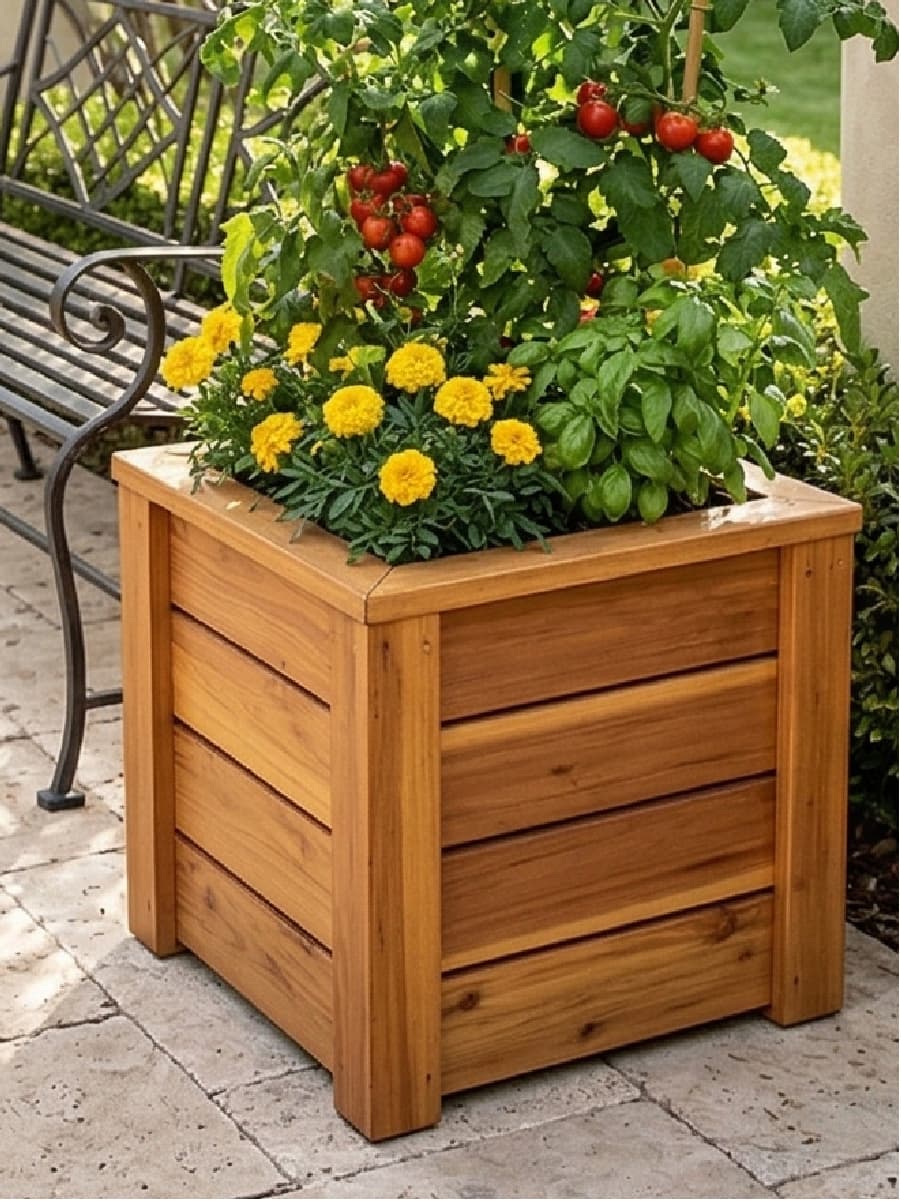
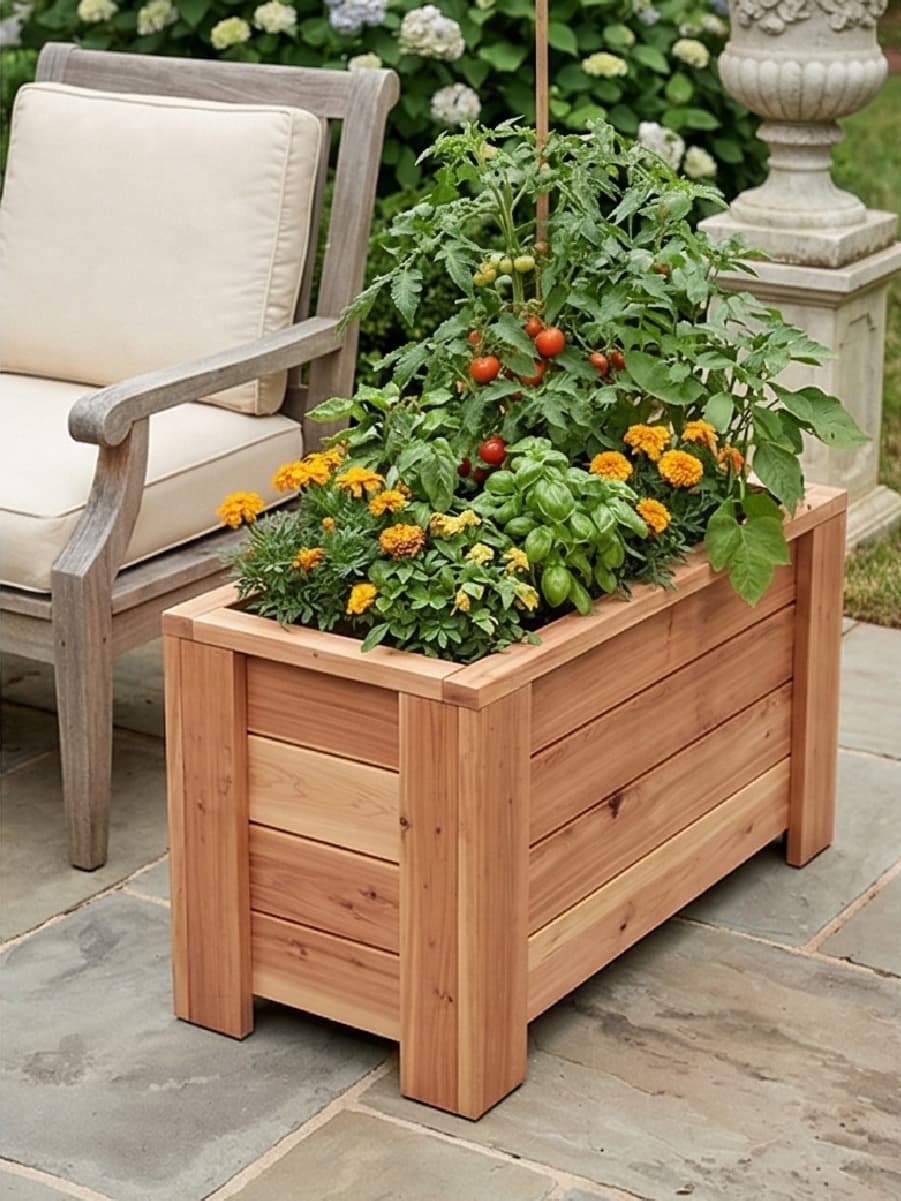
Tomatoes need 14 to 18 inches of soil depth. The Two by Four at 18" depth (48x24x18") works well for both compact determinate varieties and larger indeterminate varieties that need room to produce all season. One plant per planter is the right approach for anything but cherry tomatoes.
The variety you pick matters a lot in Atlanta's heat. Patio is a compact determinate bred specifically for container growing, which keeps it manageable on a deck or balcony. Celebrity is a disease-resistant variety that holds up well in Georgia's humid summers, where fungal issues are common. Cherokee Purple is a beloved heirloom with deep, complex flavor and good performance in Southern heat. Sun Gold cherry tomato is remarkably productive, with fruit that comes in waves from late June through October.
A full-size indeterminate variety like Celebrity or Cherokee Purple in The Two by Four at 18" depth can produce 10 to 20 pounds of fruit per plant over the season. Sun Gold and similar cherry types produce 200 or more fruits. Plant transplants between April 15 and May 15, after Atlanta's last frost date has reliably passed.
Peppers
Peppers are almost perfectly adapted to Atlanta's climate, and the city's long hot summers push both yield and flavor to their peak.
Peppers need 10 to 14 inches of soil depth. The Two by Two at 12" depth (24x24x12") handles 2 to 3 plants comfortably. The Two by Four at 12" depth (48x24x12") fits 4 to 6 plants with good spacing. Plant after April 15 and keep planting through May 31, since peppers can go in later than tomatoes without issue.
For sweet peppers, Bell Boy is the reliable standard with large, thick walls and good disease resistance. Lunchbox peppers are smaller, snack-size fruits in red, orange, and yellow that produce heavily in containers. Shishito peppers have become popular in Atlanta restaurants and are incredibly easy to grow, with thin-walled fruits ready to blister in a hot pan.
For hot peppers, Atlanta heat is genuinely an advantage. Jalapeños are productive and consistent. Cayenne peppers produce prolifically and dry beautifully on the plant. Habaneros love Atlanta summers and develop their full fruity heat in the long warm season. Expect 4 to 8 pounds of fruit from a sweet pepper plant and 25 to 50 or more fruits from a hot pepper plant over the season.
Lettuce and salad greens
Lettuce is the fastest return on investment of any container vegetable, with some varieties ready to harvest in as little as 30 days from transplant.
Lettuce and salad greens need only 6 to 8 inches of soil depth, which makes The Two by Two at 12" depth (24x24x12") a great home for them. Plant in February or March for a spring crop, and September or October for a fall crop that will produce well into December. Lettuce does not tolerate Atlanta's summer heat and will bolt quickly once temperatures stay above 80 degrees, so both spring and fall windows are important.
Buttercrunch is a reliable loose-head variety with tender leaves and good heat tolerance for a lettuce. Red Sails is a loose-leaf type with burgundy-tinged leaves and a slightly more decorative look. Mesclun is a seed mix of multiple greens that gives you variety from a single planting. Arugula adds a peppery bite and is faster to bolt than true lettuces, so harvest it young.
Cut-and-come-again harvesting extends your production significantly. Take outer leaves at soil level rather than pulling the whole plant, and the center will keep producing new growth for weeks. A single Two by Two planting of mesclun can supply salad for a household for a month or more.
Kale and Swiss chard
Kale and Swiss chard are among the most nutritious crops you can grow, and both handle Atlanta's seasons at opposite ends: kale for cool weather and chard for a longer stretch through spring and early summer.
Both need 8 to 12 inches of soil depth, which makes The Two by Two at 12" depth the minimum practical container. Plant kale in March or start seeds in August for a fall crop. Fall-harvested kale in Atlanta is noticeably sweeter than spring kale because light frosts convert some of the plant's starches to sugars. Plant Swiss chard in March and it will produce through late spring and early summer before bolting in peak heat.
Lacinato kale (also called Dinosaur or Tuscan kale) has dark, puckered leaves with an earthy flavor that holds up well in sautees and soups. Red Russian kale has more delicate, frilly leaves with a milder flavor that works well raw. Bright Lights Swiss chard has multicolored stems in red, orange, yellow, and white that make it as decorative as it is productive. A single Two by Two planting of chard provides multiple large harvests per week at peak production.
Cucumbers
Cucumbers produce fast in Atlanta heat and can deliver a serious harvest from a single container once they get going.
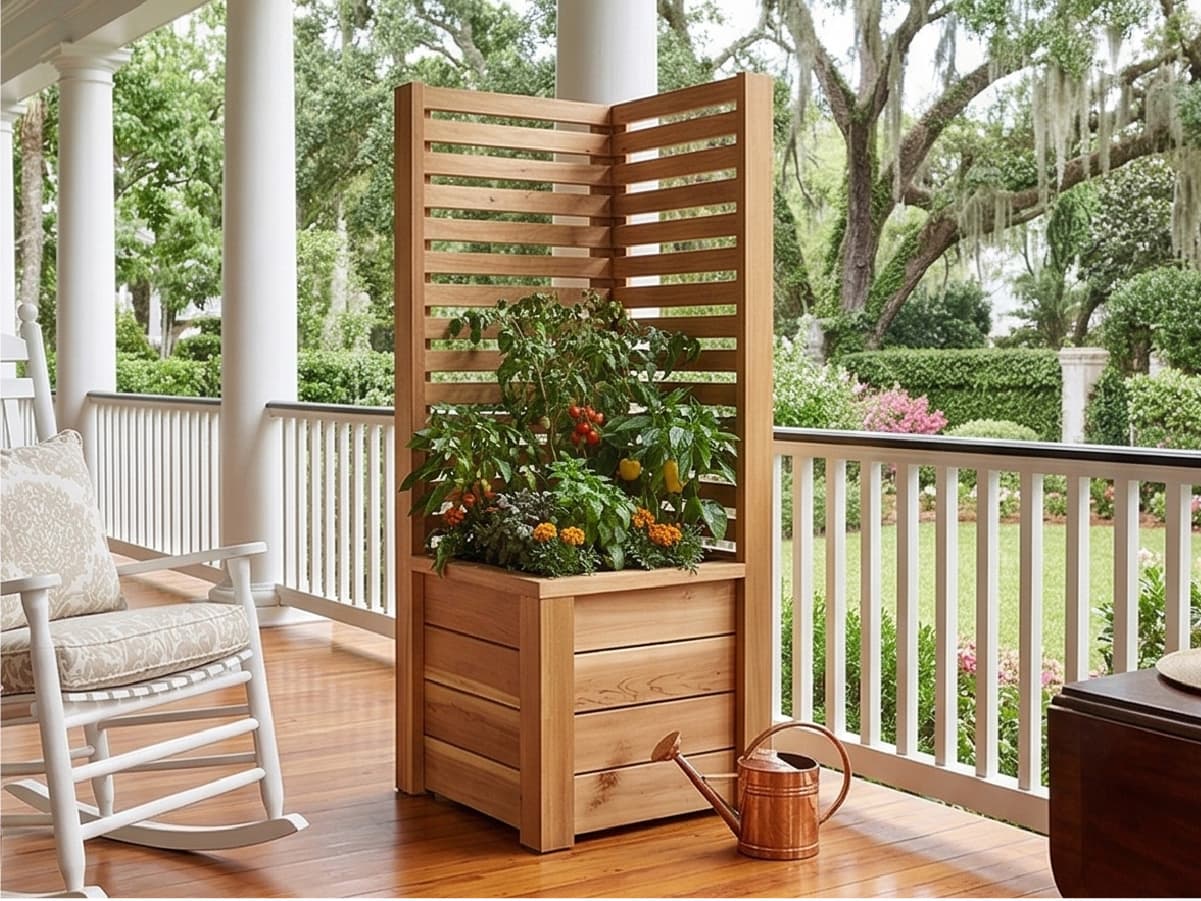
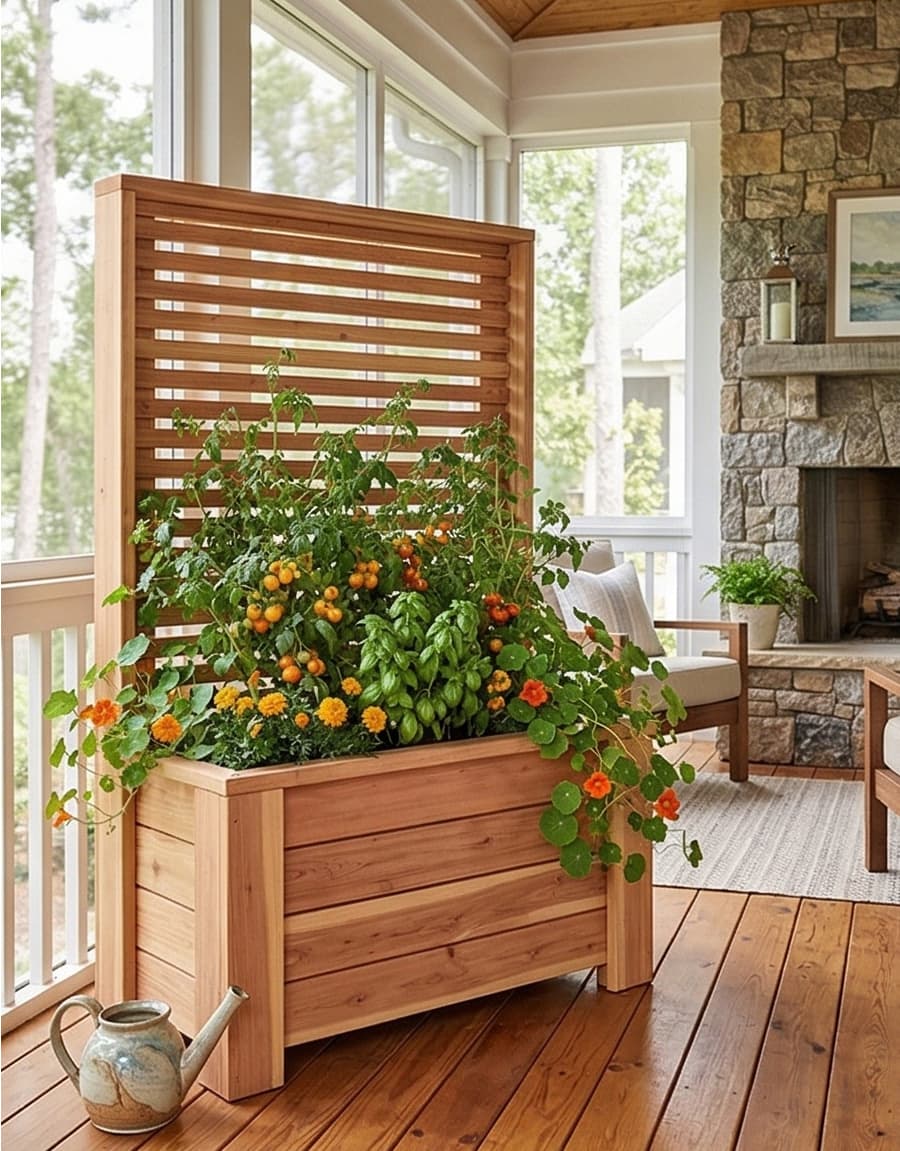
Cucumbers need 12 to 16 inches of soil depth and grow best in The Two by Four at 18" depth (48x24x18"). They are vining plants even in their bush forms, so a trellis or cage behind the planter is helpful and keeps the fruit off the soil. The Backdrop (48x24 with a built-in wall trellis) is an ideal match for cucumbers since the vines can climb right up it. Plant in May once soil temperatures are consistently warm.
Bush Pickle is a compact variety bred for containers that produces abundant pickling cucumbers on a manageable plant. Spacemaster stays relatively small and produces slicing cucumbers reliably in Atlanta heat. Patio Snacker is a newer variety with snack-size fruits and excellent container performance. Cucumbers produce heavily for 4 to 6 weeks and then slow down, so two plantings a month apart can extend your harvest.
Bush beans
Bush beans are one of the simplest and most satisfying vegetables to grow in containers, with no staking or trellising required.
Bush beans need 8 to 10 inches of soil depth and do well in The Two by Two at 12" depth or The Two by Four at 12" depth. Direct sow seeds rather than transplanting, since beans develop better root systems when sown in place. Plant in April or May for a summer crop, or in August for a fall crop that finishes before frost. Bush beans fix nitrogen in the soil, which is a bonus for container mix health over multiple seasons.
Contender is a classic Southern variety with good heat tolerance and consistent production. Provider is known for germinating reliably even in slightly cool soil, which makes it a good choice for early April planting. Blue Lake Bush is widely considered the best-flavored bush bean for fresh eating. Each plant produces roughly half a pound of beans, so a Two by Two planting of 8 to 10 plants gives you a meaningful harvest. Beans mature all at once, so plan to pick frequently during the 2-week production window.
Radishes
Radishes may be the single best vegetable for a small planter, combining minimal depth requirements with the fastest harvest time of any crop on this list.
Radishes need only 4 to 6 inches of soil depth, which makes The Two by Two at 12" depth perfect for them. Direct sow seeds, since radishes do not transplant well. Plant from February through April for spring crops, and September through November for fall crops. Radishes bolt quickly in heat, so the cool-season windows are essential.
Cherry Belle is a round red radish that is ready to harvest in just 22 days from sowing, which might be the fastest vegetable you can grow. French Breakfast produces elongated red-and-white radishes with a milder flavor than round types. Easter Egg is a mix of red, pink, purple, and white radishes that are visually striking and mild enough to eat raw without bite. Succession planting every two weeks from February through April gives you a continuous supply through late spring.
Squash and zucchini
Squash and zucchini are the largest plants on this list and need the largest container, but a single plant produces more than most households can eat.
Squash and zucchini need 16 to 18 inches of soil depth. The Two by Four at 18" depth (48x24x18") is the right planter, with one plant per container. Trying to crowd two squash plants together always ends badly. Plant in May or early June once nighttime temperatures stay above 55 degrees consistently.
Patio Star zucchini is a compact variety bred for containers with a more upright habit that takes up less horizontal space than standard zucchini. Bush Baby butternut squash stays more compact than full-size butternut while producing genuine winter squash fruits that store well. Standard zucchini varieties like Black Beauty produce prolifically in Atlanta's summer heat, sometimes outpacing a household's ability to use them. Check for fruit every two days during peak production or you will end up with baseball-bat-size zucchini that are past their best eating.
Which planter for which crop
Matching soil depth to root depth is the most important factor in container vegetable success. Here's a quick reference for each planter size.
| Planter | Depth | Best crops |
|---|---|---|
| The Two by Two at 12" depth (24x24x12") | 12" | Lettuce, radishes, herbs, spinach, peppers, bush beans, kale, chard |
| The Two by Four at 12" depth (48x24x12") | 12" | Peppers, bush beans, kale, chard, most herbs (more growing area) |
| The Two by Four at 18" depth (48x24x18") | 18" | Tomatoes, cucumbers, squash, root vegetables, dwarf fruit |
| The Arbor (24x24 + trellis) | 12" or 18" | Cucumbers, peas, beans, and anything that climbs |
| The Backdrop (48x24 + wall trellis) | 12" or 18" | Cucumbers, tomatoes with support, vining crops |
A few notes on this table. The Two by Four at 18" depth works for both determinate and indeterminate tomato varieties, giving roots plenty of room to spread. For cucumbers and other vining crops, The Arbor or The Backdrop provide built-in trellis support so you don't need a separate structure. The Two by Four at 18" depth is the minimum size for squash or zucchini.
For households starting with container vegetables, a combination of one Two by Two for salad greens and radishes, one Two by Two or Two by Four at 12" depth for peppers or beans, and one Two by Four at 18" depth for tomatoes covers most of what a family would want from a kitchen garden. That setup gives you cool-season crops running February through April and September through November, plus warm-season crops from late April through frost.
Atlanta vegetable planting calendar
Atlanta's last frost date is April 15. That date divides the vegetable year into cool-season and warm-season windows. Getting the timing right is as important as picking the right variety.
| Month | What to plant |
|---|---|
| February | Direct sow lettuce, spinach, and radishes. Sow kale transplants indoors if starting from seed. Cool-season vegetables thrive in Atlanta's February temperatures. |
| March | Transplant kale and Swiss chard. Continue sowing lettuce and radishes. Last window for fall-style cilantro before heat arrives. Start tomato and pepper seeds indoors for May transplanting. |
| April (after the 15th) | Transplant tomatoes and peppers outdoors. Direct sow bush beans. Cool-season crops still going in earlier plantings; harvest them before summer heat causes bolting. |
| May | Continue transplanting tomatoes and peppers through May 31. Direct sow cucumbers and squash. Plant a second round of bush beans for a staggered harvest. |
| June | Last chance for squash and zucchini transplants. Begin harvesting early tomatoes and cucumbers. Keep all containers well watered as Atlanta heat peaks. |
| July through August | Harvest and maintain. Water containers daily or even twice daily in peak heat. Tomatoes and peppers produce heavily. Start bean seeds in August for a fall crop. |
| September | Cool-season crops return. Direct sow lettuce, spinach, arugula, and radishes. Transplant kale seedlings. Warm-season crops still producing but winding down. |
| October | Continue sowing cool-season greens and radishes through mid-month. Frost risk increases after October 15, so watch the forecast. Kale improves with light frosts. |
| November | First frost typically arrives mid-month. Hardy greens like kale and chard may continue past frost. Pull warm-season plants after first hard freeze. |
One pattern that surprises many first-time Atlanta container gardeners: the fall vegetable season is often more productive than spring. Lettuce and kale grow more slowly in fall's cooling temperatures, which means longer harvest windows before bolting. Radishes sown in September produce more uniformly than March plantings because temperatures are more stable. Fall is a genuinely good time to grow food in Atlanta, and it's worth planning for it from the start of the season.
The setup that makes the most sense for most households is a mix of planter sizes that covers both cool-season and warm-season crops. A Two by Two dedicated to salad greens and radishes runs almost nine months of the year. A Two by Two or Two by Four at 12" depth handles peppers and beans through the warm months. A Two by Four at 18" depth anchors the setup with tomatoes from May through October. That combination gives you fresh food from February through December in most Atlanta years.