Herbs to plant
July is the peak herb harvest month in Atlanta, and the focus shifts from planting to preserving. Basil, oregano, thyme, and mint are all producing at their maximum in July's heat and long days, and the best use of that abundance is to harvest heavily and preserve what you can't use fresh.
Drying herbs is simple and effective. Cut stems in the morning after the dew dries but before the heat of the day, which is when essential oil concentration is highest. Tie small bundles with rubber bands (bundles shrink as they dry) and hang upside down in a warm, well-ventilated spot out of direct sun. Thyme, oregano, and rosemary dry beautifully in 1 to 2 weeks. Basil is better frozen than dried — blanch leaves briefly in boiling water, shock in ice water, dry, and freeze flat on a sheet pan before transferring to bags.
Cilantro is done for the season. The heat of Atlanta's July is incompatible with cilantro's cool-season preference, and any plants still in containers should be pulled out to make room for other things. Save any coriander seeds that have formed if you want them for cooking or to plant in September.
Mint is thriving in July despite the heat. Harvest aggressively — the plant can easily handle losing half its volume and will flush out new growth within days. Fresh mint for cocktails, iced tea, and mint juleps is one of the great pleasures of an Atlanta summer container garden.
Flowers to plant
Bee balm (Monarda) reaches peak bloom in July and is one of the showiest and most wildlife-friendly plants in the Atlanta summer garden. The tubular flowers are magnets for hummingbirds and butterflies. Jacob Cline is a red variety with excellent mildew resistance. Marshall's Delight is a bright pink. Both are perennials that return each year and grow larger over time.
Zinnias, lantana, and pentas planted in April and May are in their full stride in July. Consistent watering and weekly deadheading of zinnias is the work of the month. A zinnia container that's well-deadheaded in July will look almost as good in October as it does now. Skip the deadheading and the plants go to seed and stop producing new flowers.
Portulaca (moss rose) is one of the most underrated July planting options for Atlanta containers in full sun. It produces small, jewel-like flowers in orange, pink, red, and yellow and tolerates both drought and intense heat better than almost any other flowering annual. Direct-sow seeds or plant transplants now for color through September.
Vegetables to plant
July is more about managing the existing summer garden than adding new plantings, but there are still a few worthwhile moves to make.
Tomatoes, peppers, cucumbers, and squash planted in April and May are at peak production. Managing them well this month — consistent watering, removing diseased leaves, harvesting frequently — is more valuable than any new planting. Tomatoes stop setting new fruit when temperatures exceed 95 degrees, which happens during Atlanta's hottest July stretches. This is normal and temporary. Production resumes when temperatures moderate in late August.
Start fall vegetable seedlings indoors in late July. Broccoli, kale, cabbage, and cauliflower all need 6 to 8 weeks of indoor growing before they're ready to transplant outside in late August and September. Starting them in late July — around the 15th to the 31st — gives you transplant-sized plants by late August when outdoor temperatures start to moderate. Start seeds in small cells or pots under grow lights or in a bright window, not outdoors where July temperatures will prevent germination of cool-season crops.
A mid-July planting of okra seeds is still viable for a fall harvest. Okra grows quickly in heat and 60-day varieties like Clemson Spineless planted mid-July will be producing by mid-September and continuing well into October.
Fruits in season
Blueberries are in peak harvest in July. Highbush varieties like O'Neal typically fruit in June and July. Check plants every 2 to 3 days and harvest berries that pull off easily. Blueberries don't ripen after picking, so leave any still-firm berries on the bush and check again in a few days.
Day-neutral strawberries like Albion and Seascape are producing continuously through July in smaller flushes. Keep the soil consistently moist and remove any runners to keep energy focused on fruit production rather than vegetative spread.
Fig trees in large containers may produce their breba crop (the small first crop on last year's wood) in July. Celeste and Brown Turkey figs are the most common Atlanta varieties. The main crop follows in August and September. Figs are ripe when they're soft to the touch and hanging downward — a ripe fig loses the upward-pointing posture of an unripe one.
Care tasks this month
Watering is the central job of July, and it's not optional. Atlanta's July average high is 90 degrees, with heat index values often pushing toward 100 or above. Containers in full sun lose moisture rapidly, and plants under heat stress are far more vulnerable to pest and disease problems.
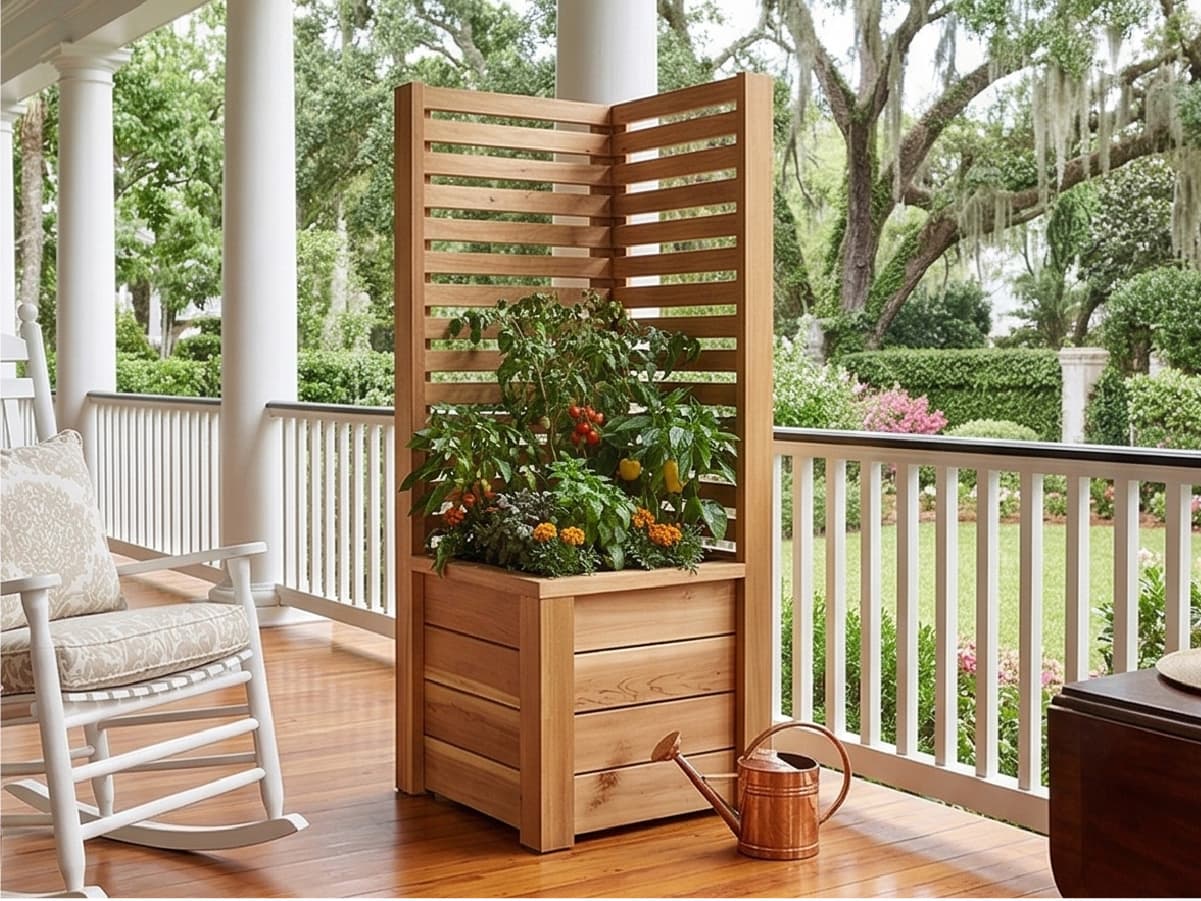
Consider shade cloth for containers that sit in full western afternoon sun. A 30 percent shade cloth attached to a simple frame over The Two by Four reduces air temperature around plants by 5 to 10 degrees and can make the difference between tomatoes that set fruit and tomatoes that drop their flowers in the heat. Remove shade cloth by mid-September when temperatures moderate.
Spider mites thrive in hot, dry conditions and are a common July pest on tomatoes, peppers, and squash. They appear as a fine speckling on leaf surfaces, often with tiny webbing on the undersides of leaves. A strong spray of water on the undersides of leaves disrupts colonies. Neem oil applied in the evening works well for persistent infestations.
July is also a good time to evaluate container soil. Potting mix compacts over the season and loses structure. If water is sitting on the surface rather than draining immediately, the mix has become hydrophobic or compacted. Aerating with a pencil or chopstick and top-dressing with fresh compost helps, though severely compacted mix may need replacement in fall.
What to harvest
July is the single most productive harvest month in the Atlanta container garden. Tomatoes, peppers, cucumbers, squash, basil, mint, and blueberries are all at peak production simultaneously, and keeping up with the harvest is the main challenge.
Harvest zucchini and summer squash when they're 6 to 8 inches long. Left to grow larger, they become seedy, watery, and tasteless, and they signal the plant to slow new fruit production. Picking at 6 to 8 inches keeps the plant producing new fruit rapidly.
Cucumbers should be harvested before they yellow. A yellowing cucumber is overripe, and leaving it on the vine signals the plant to stop producing new fruit. Bush Pickle cucumbers are ready at 3 to 4 inches for pickling or 5 to 6 inches for slicing.